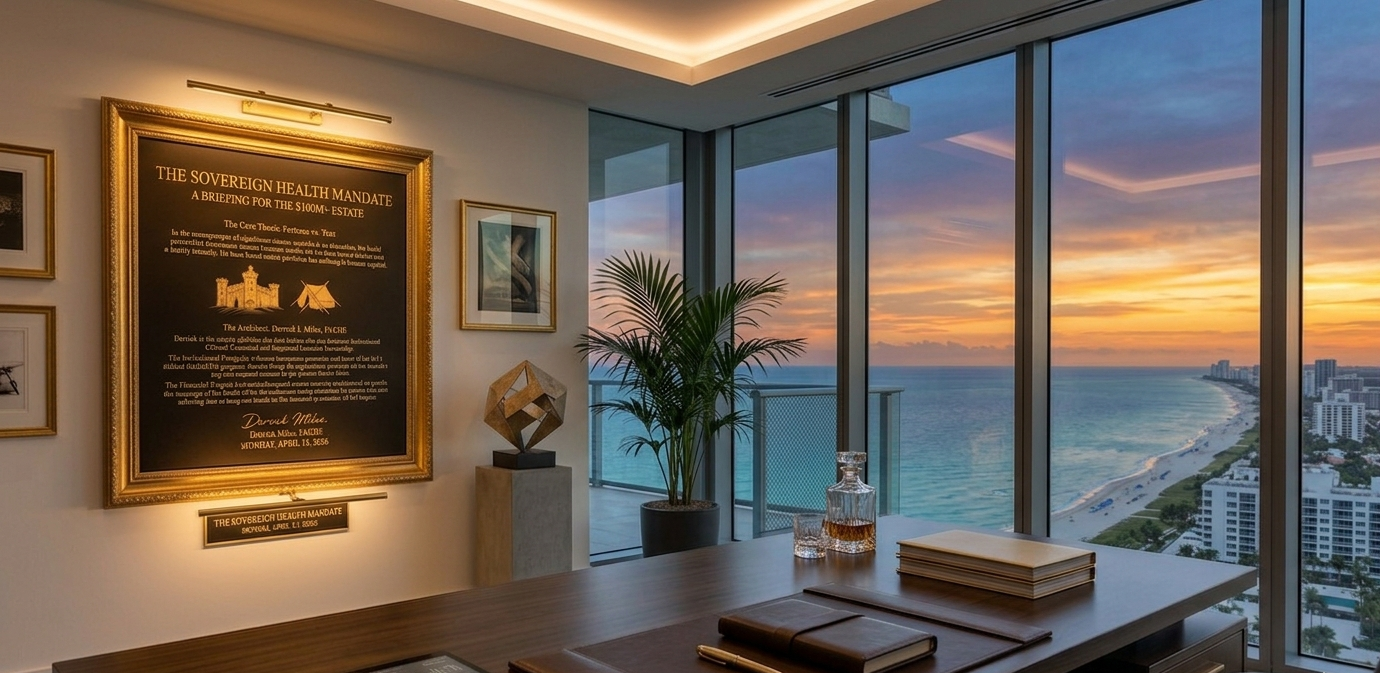
THE SOVEREIGN HEALTH MANDATE
PREPARED BY: Derrick L. Miles, FACHE
SUBJECT: Institutional Governance of Human Capital & Biological Infrastructure
CLASSIFICATION: Private Client / Family Office – Confidential
I. EXECUTIVE SUMMARY: FORTRESS VS. TENT
In the architecture of the $100M+ estate, security is an obsession. Principals spend millions to build impenetrable fortresses around their financial assets, cybersecurity, and physical residences. Yet, the most critical asset—the Principal’s biological engine—is often left in a tent.
A “Tent” is a reactive, episodic medical model that relies on the hope that a provider picks up the phone. A “Fortress” is a proactive, fiduciary-grade infrastructure that governs health with the same technical and financial rigor as the estate’s underlying capital. The Sovereign Health Mandate transitions your family from biological fragility to institutional resilience.
II. THE STRATEGIC PROBLEM: THE VULNERABILITY OF THE TENT
Most Family Offices operate under a “Tent Philosophy,” which creates three “Quiet Risks”:
- The Key Person Vacuum: While the portfolio is stress-tested, the Principal’s health is managed via fragmented, non-integrated medical perks. A single biological black-swan event triggers immediate governance crises, key-man volatility, and tax implications.
- The G3 Attrition: Successors (G2/G3) who lack the physical and mental discipline to manage their “Human Capital” are the greatest threat to wealth preservation. A temporary service cannot protect a legacy from an unprepared heir.
The Fiduciary Disconnect: Disjointed clinical services lack the FACHE-level operational rigor and Series 7/66-level reporting required to integrate with a Principal’s financial, legal, and security teams. You cannot protect a fortress with retail-grade coordination.