For the modern family office, wealth preservation has traditionally focused on a diversified portfolio of uncorrelated assets: private equity, real estate, venture capital, and digital assets. However, a critical vulnerability remains. The most sophisticated financial strategy is only as robust as the individuals responsible for executing it.
In the upper echelons of wealth management, we are witnessing a paradigm shift. We are moving beyond “wealth management” into the era of Human Capital Optimization. This is the recognition that Healthspan—the period of life spent in good health—is the final and most consequential asset class.
The Institutionalization of Longevity
Traditionally, health has been viewed as a private, reactive matter—something addressed only when it breaks. For a multi-family office or a private family trust, this “break-glass” approach represents a significant operational risk.
When a Principal or a key successor faces a health crisis, the “performance leak” is felt across the entire ecosystem. Decision-making is compromised, succession timelines are accelerated under duress, and institutional knowledge is prematurely lost. By treating health as a formal asset class, family offices can apply the same rigor to biological longevity as they do to fiscal year returns.
Health as a Hedge
In the financial world, a hedge is used to reduce the risk of adverse price movements in an asset. In the context of the family unit, optimized healthspan acts as a hedge against human capital risk.
- Succession Readiness: Strategic planning is futile if the next generation lacks the cognitive resilience and physical energy to manage the complexities of a global legacy.
- Cognitive Preservation: In an era where information is the primary currency, preserving the “biological hardware” (the brain) is essential. High-performance protocols—ranging from advanced diagnostics to personalized longevity medicine—ensure that the Principal’s wisdom remains an active asset for decades longer than previously possible.
- Operational Continuity: A family office that integrates a health division ensures that wellness is not an afterthought, but a core component of the governance structure.
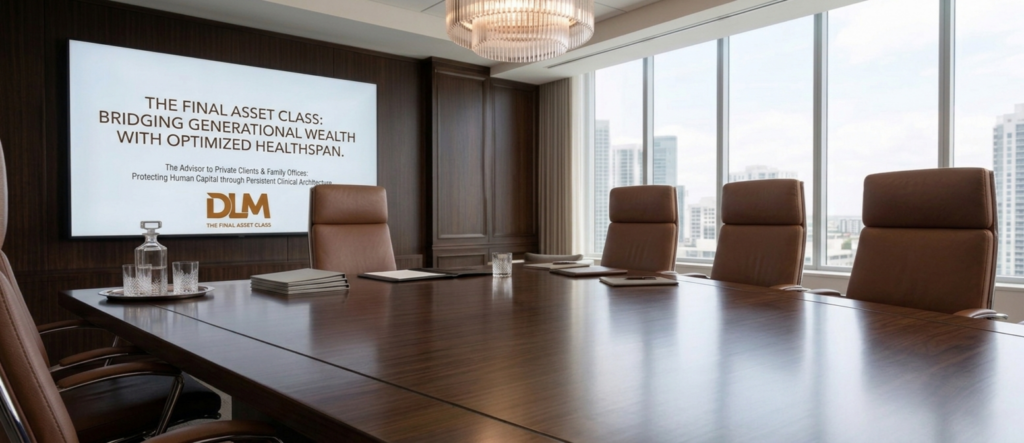
Bridging the Generational Gap
Generational wealth transfer is notoriously difficult; the “shirtsleeves to shirtsleeves in three generations” proverb exists for a reason. Often, the friction in wealth transfer isn’t about the money—it’s about the lack of alignment and mentorship between generations.
Optimizing healthspan provides the one thing money cannot usually buy: Time. Extended healthspan allows for a longer “overlap” between generations. It provides the space for deliberate mentorship, the transfer of values, and the collaborative development of the family’s mission. When the senior generation remains vibrant and the rising generation is physically and mentally optimized, the “bridge” of generational wealth becomes a permanent structure rather than a precarious crossing.
The New Standard of Stewardship
The role of the family office advisor is evolving. It is no longer enough to report on quarterly earnings. The new standard of stewardship requires asking: What is the biological ROI of our current lifestyle? How are we mitigating the health risks of our leadership?
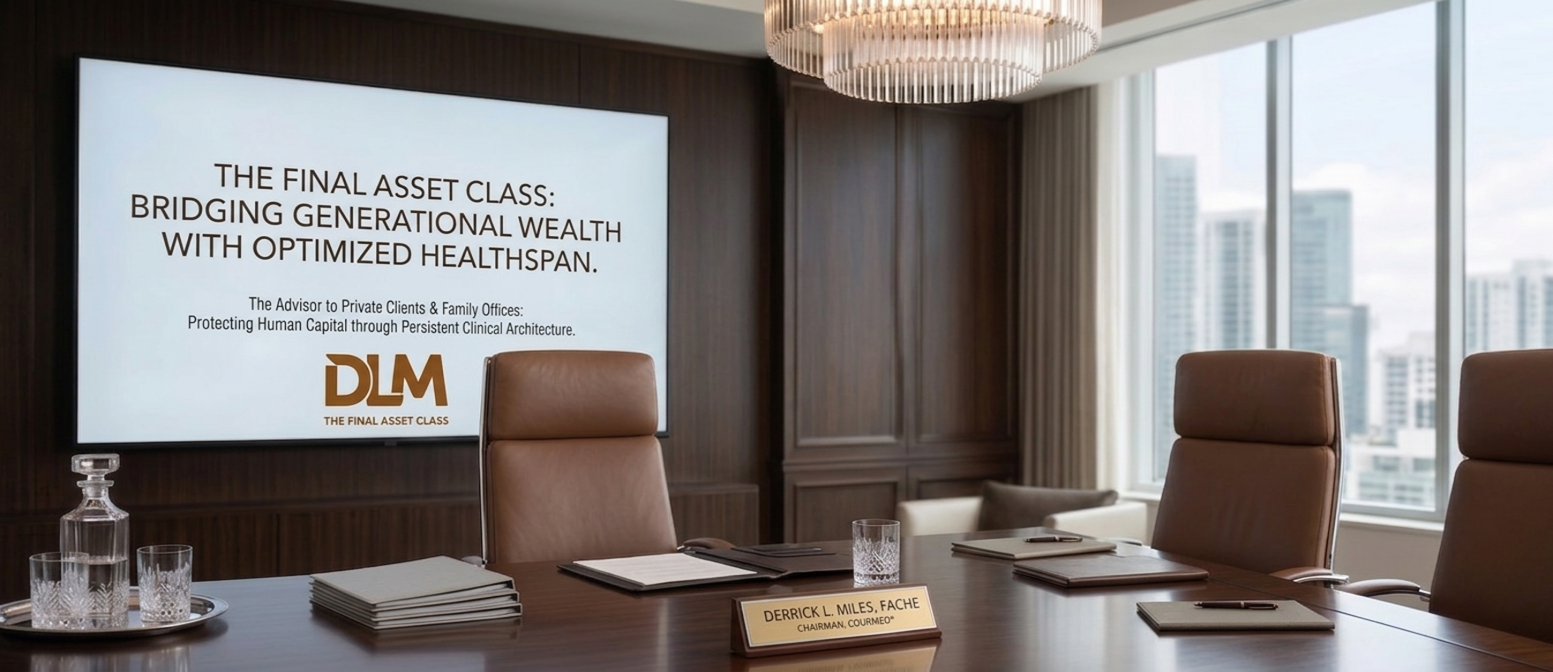
By bridging generational wealth with optimized healthspan, we are not just protecting capital; we are optimizing the human beings who give that capital purpose. This is the final frontier of wealth management—the institutionalization of vitality.